
But I didn't *plan* to get hypothermic today
By Clara M., an Advanced EMT currently working on wildland fire assignments, an AMGA Apprentice Rock and Alpine Guide, and an active member of a mountain search and rescue team. Read more about Clara and the rest of our team on the Instructor Bio page.
Hypothermia, a daily occurence
I am packing my svelte 20L bullet backpack in the Paradise parking lot to get ready for a ski tour to Camp Muir. I love this pack! It is so light on the uphill and doesn’t affect my weight balance on my turns. It is a clear and sunny late December day, so I slather on sunscreen and wear my soft shells, headband, and sun hoody. I throw in a puffy jacket and enough food and water to sustain myself on the four hour ski uphill. There’s a storm rolling in around midnight, but the Longmire gate closes at 4, so we will be long gone before then.
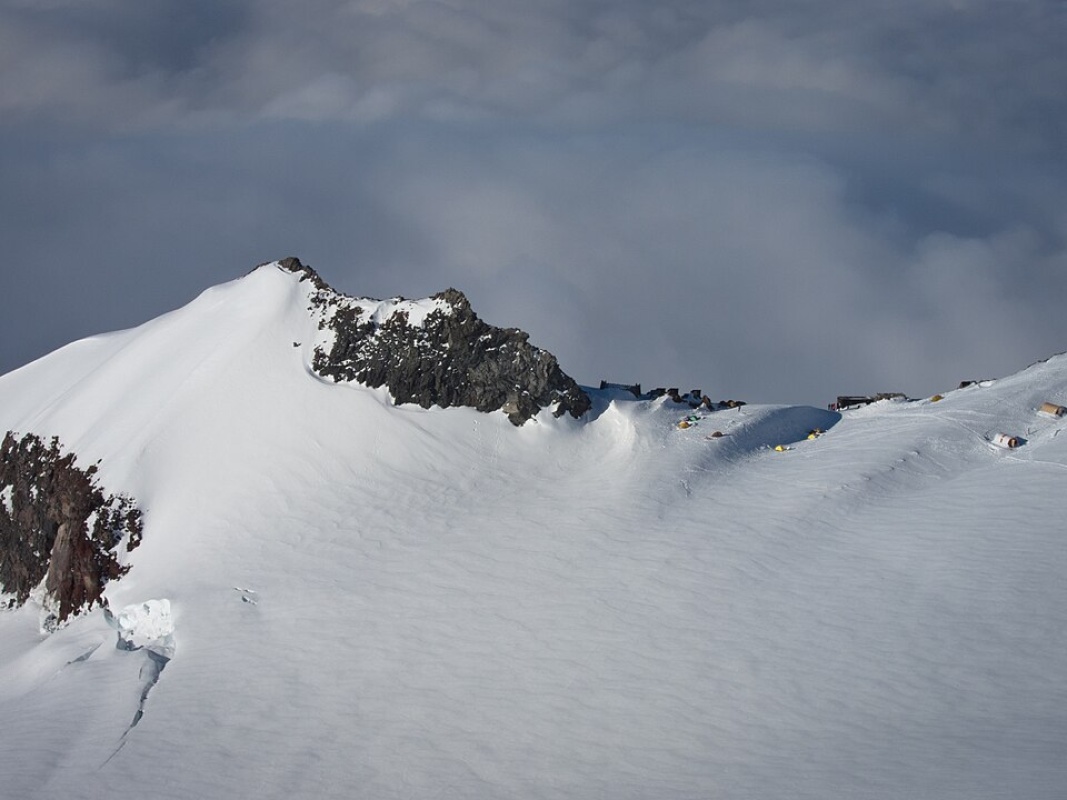
The skin up is great with a supportable crust making travel easy and I note a few sharks (rocks protruding out of the snow) to avoid on my descent. It is beautiful at Camp Muir, but I do see a lenticular cloud forming above the summit of the mountain, indicating windy conditions are beginning. I drink an IPA quickly before ripping skins to head back downhill. The snowfield skis great and I’m having a great time carving backcountry turns.
Towards the bottom of the snowfield, I ski over a wind lip that is a bit bigger than I expected and land hard. I struggle to stick the landing…I fall…and my skis don’t release. I hear a loud “snap!” and for a brief millisecond I hope I broke my ski. But then, almost instantly, I feel searing pain at the top of my ski boot, like a serrated knife is being roughly gouged into my shin. My DIN is probably set a little too high…The days are short, it’s almost 4 o’clock, and the sun is setting. Within minutes of laying in the snow, I am freezing, my micro puff jacket doing nothing to protect me from the increasing wind that feels like slivers of ice penetrating every skin cell.
My partner does the best that they can. They try to stabilize my boot with my ski poles, attempt to dig a snow cave around us, and get out a 911 call in the spotty service and ripping wind. They are only able to dig a measly 6-inch tall break from the wind because the snow has either blown away or frozen solid. The wind picks up to hurricane force and snow is blowing so forcefully around us that it is hard to even tell if it is falling from the sky. Reality sets in, I remember the forecast I checked last night, snow storm for the next 10 days straight. I am out of food, out of water, have no more layers to put on, no shelter, and my leg is so broken I can’t even think about moving. I’m shivering uncontrollably and my partner has a look of fear that is out of proportion for my leg injury. They know we won’t make it through the night like this.
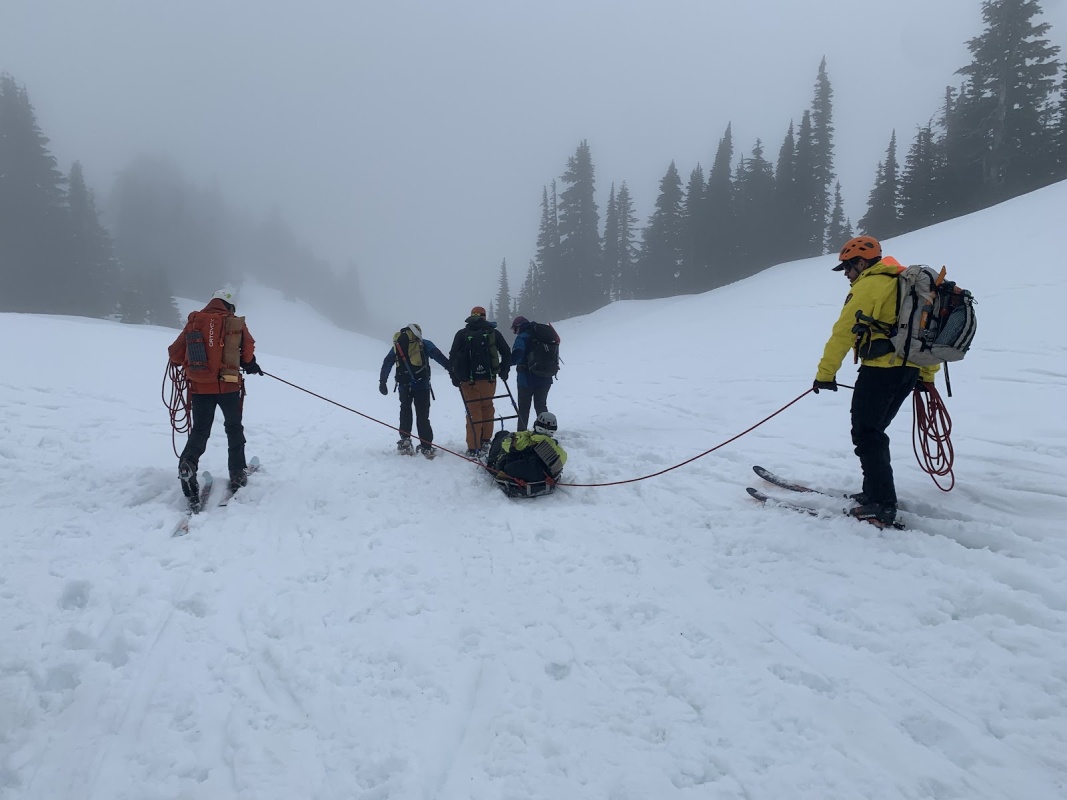
This story as written is fiction, but each aspect of the story is true, a compilation of the common mistakes I have seen many winter recreationalists make during my time leading a search and rescue team at Mount Rainier. This story is not introduced to teach how to treat musculoskeletal injuries, but rather the secondary hypothermia that follows these inevitable injuries. Who goes out on their hike, ski, snowshoe, or climb planning to get hypothermic that day? Nobody! But hypothermia is a real life-threatening medical problem that everyone is vulnerable to in the mountains. We must prepare for it like it is a daily occurrence, because as a rescuer, for me, it was. As a park ranger, I have seen secondary hypothermia in most people requiring rescue as a result of their primary injury, medical problem, or getting lost in the wilderness. These events make people stay in the backcountry longer than expected or more stationary than they planned and make them vulnerable to significant heat loss.
Climbing and skiing with a heavy pack is not fun. It makes the approach longer, crux sequences harder, and my skiing worse. In my career in mountain search and rescue, we put almost every injured or ill person needing extrication into a hypothermia wrap, this is how prevalent secondary cold injuries are.
What is Hypothermia?
Hypothermia occurs when the body loses more heat than the body is creating or gaining from the environment. Hypothermia is specifically defined as a core body temperature below 95 °F. In Washington, we are particularly vulnerable to hypothermia because of the nearly year-round cold and wet climate. It is also possible to experience symptoms of cold stress and not yet hypothermia.
Why Hypothermia is so scary
Once someone starts descending down the “hill of hypothermia”, it is a lot harder to push them back up to normal temperatures at the top of the hill. This is because once a patient is moderately hypothermic, the body is no longer able to warm itself effectively. The patient will stop shivering and their metabolism will not be able to keep up. Once this stage has been reached, the patient will need an external heat source to rewarm them, and unfortunately yes, this means more than just a cuddle.
Hypothermia often occurs secondary to traumatic injuries because when patients are injured, they lose the ability to actively rewarm themselves through movement. Hypothermia also worsens traumatic injuries by impairing the body’s ability to clot blood (coagulopathy) and can contribute to shock.
Although hypothermia is most common in very cold temperatures, it can occur at relatively warm temperatures as well, especially when combined with traumatic injuries or wet and windy conditions that increase heat loss. Children, elderly, people with certain health conditions and disabilities, and people using drugs or alcohol are even more vulnerable to hypothermia.
Stages of Hypothermia
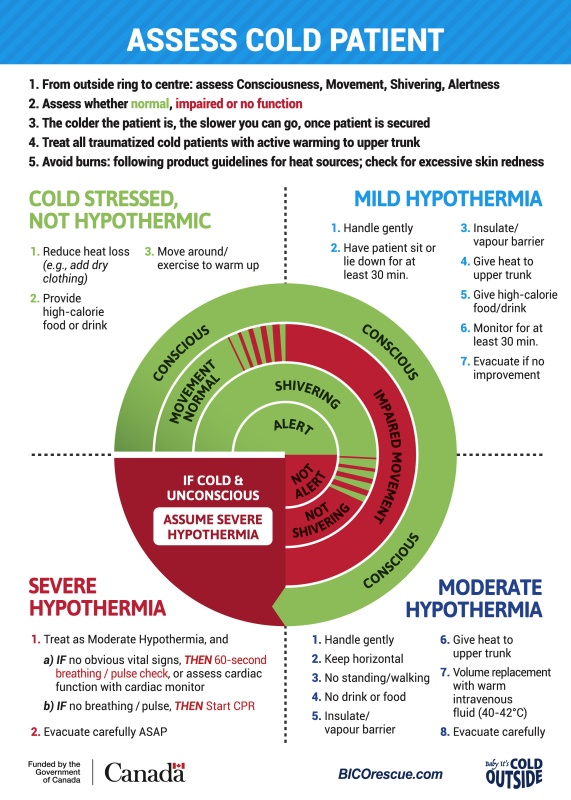
Hypothermia is categorized based on core body temperature: mild (90-95 °F), moderate (82-90 °F), and severe (<82 °F). However, in the wilderness environment, most oral thermometers are unreliable (if you are carrying one at all), many cannot read below 95 °F, and taking a core temperature is often challenging. We often have to use symptom-based treatments instead and err on the side of caution with aggressive hypothermia prevention and treatment.
Cold Stress
- Normal Mental Status
- Alert and Oriented
- Able to care for self
- Shivering
- Coordinated
- Intact fine motor skills
Mild
- Alert and Oriented
- Shivering
- Begin to need help caring for self
- Poor coordination
- Loss of fine motor skills
- Increased heart rate
- Normal blood pressure
Moderate
- Decreased mental status
- Not Alert
- The "Umbles”: mumbles, bumbles, fumbles, grumbles
- May have uncontrolled shivering or cessation of shivering
- Paradoxical undressing
- Decreased blood pressure
Severe
- Unconsciousness
- Unresponsiveness
- Decreased heart rate and respiratory rate
- Even lower blood pressure
- Abnormal heart rhythms
- Respiratory arrest
- Cardiac arrest
Treating Hypothermia
Prevention of hypothermia is the best medicine. Achieve this with adequate layering, hydration, food intake, appropriate shelter and avoiding drugs/nicotine/alcohol. Read through the opening story again, which of these was this skier lacking?
Once someone losing body heat, it's imperative to keep them from sliding further down the hill. It's best to address cold stress before it progresses to hypothermia, or address mild hypothermia before it becomes moderate or severe. Listen to your body and take care of these symptoms yourself before you are unable to.
Cold Stress
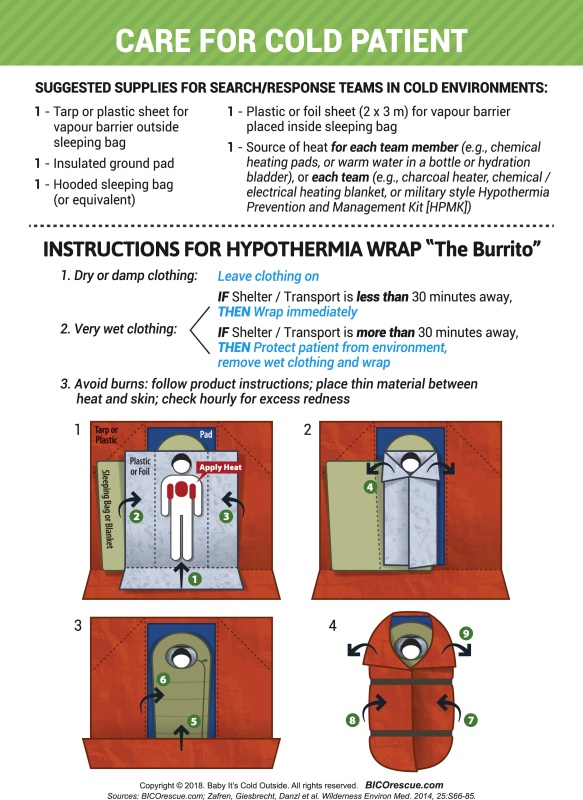
Stop the progression! In this stage, the body’s metabolism can still keep up with the demand of the cold if addressed quickly. Stop any further heat loss – add dry clothing and seek shelter. Moving, including shivering, is the body's best way of warming up, so fuel this shivering process adequately. Drink warm sugary drinks, eat food containing carbohydrates, and move around/exercise to warm up.
Mild Hypothermia
In mild hypothermia, the patient may have some ability to take care of themselves, but their motor control may be impaired and they may need help to stop heat loss and rewarm to a healthy temperature. Use a hypothermia wrap, otherwise known as a human “burrito”, to warm them. Be gentle while wrapping them – the heart is vulnerable to arrhythmias in this cold state. The hypothermia wrap must contain insulation, a vapor barrier, and an external heat source, best applied to the chest, upper back, and armpits. Monitor the patient for half an hour, and if symptoms do not improve, evacuate the patient – they are likely declining to moderate hypothermia.
Moderate Hypothermia
If moderate hypothermia is suspected, from decreased mental status or the “umbles”, treat the hypothermia aggressively! Handle the patient gently to avoid an arrhythmia, but get them in a hypowrap ASAP (if you have not already done so) and evacuate them. Do not give food or drink because their alertness may have declined to the point that it poses a choking hazard.
Severe Hypothermia
In severe hypothermia, a person may appear dead, but the body may still be alive and able to be resuscitated but just have an extremely slowed metabolism from the cold. Patients have survived with core temperatures as low as 53 °F. Carefully check a carotid pulse for at least one minute. Do not perform compressions if any pulse is felt, even if it is incredibly slow. If no pulse is felt after one minute, provide CPR. (Want to learn more? Take a CPR class!)
Tips/FAQs for caring for a hypothermic patient
Why shouldn't a hypothermic person take a hot shower/bath?
Immersion in warm water or a hot shower is not recommended for patients with hypothermia. This immersion may rapidly rewarm the extremities, causing peripheral vasodilation, which can lead to complications. Peripheral vasodilation means that arteries, capillaries, and veins in the extremities rapidly expand. The suddenly-increased volume of these peripheral blood vessels will be filled by blood from the heart, lungs, and brain, which causes a corresponding drop in blood pressure in the core, adding shock to the patient's list of problems.
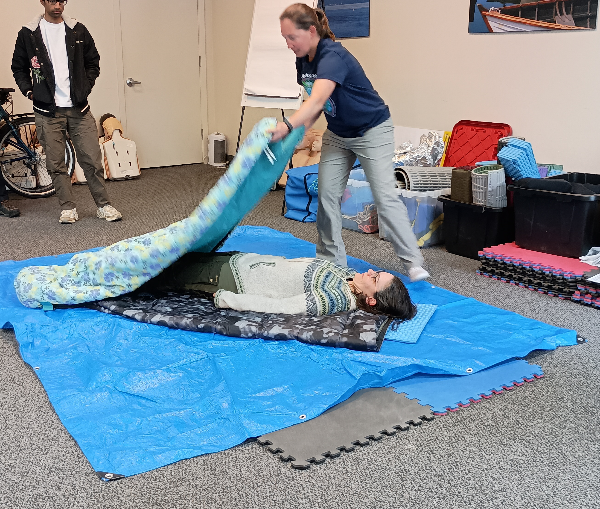
What's an appropriate heat source?
Heat sources can include chemical heat packs, forced air, and hot water bottles. Heat should be applied to upper torso (with insulation from direct skin contact), and care taken to monitor for burns. Small chemical heat packs (hand warmers) are not recommended for core rewarming as they do not provide sufficient heat to raise core temperature. In a backcountry setting, using a stove to boil snow or water for hot water bottles is a common and reasonable approach.
When should you remove wet clothes from a person with hypothermia?
Heat transfers more efficiently through water, so wet clothing is a frequent contributor to heat loss in hypothermia situations. So as a general recommendation, we try to protect the patient from the environment, and then remove wet clothing and replace it with dry insulation. (Though we wouldn't want to remove their wet clothing without protecting them from the environment and having dry insulation – being wet, cold, and now naked is not an improvement!)
As noted on the WMS cold card, there is an important caveat to removing wet clothing: if we can get a patient to shelter or transport to definitive care within 30 minutes, we should not spend time removing wet clothes. Instead, we should burrito them up, wet clothes and all, and then hightail it to definitive rewarming. Unfortunately, this half-hour window is often unachievable in a backcountry setting.
Emergency Equipment
When we’re heading into the backcountry, we should prepare not for if something goes wrong, but rather for when something goes wrong. Carrying just a few more pieces of emergency equipment to keep warm and dry can mean walking away from an incident or being recovered in a body bag.
Emergency equipment protects from the “what if’s” in outdoor recreation. It is a balance though, carrying too heavy of a pack can make you less safe. Balance the amount of emergency supplies with the weather forecast (current and extended), type of activity, risk, and trip duration. For this skier, a fall resulting in a broken lower leg and hypothermia is a common risk. This skier could prepare for this potential event by bringing a few extra items of emergency equipment:
- Sleeping Pad - to insulate from cold ground
- Puffy Pants and Puffy Parka - to provide enough warmth to last throughout the night
- Bivy Sack or Tarp - to protect from wind and precipitation, even better when combined with a snow cave, bright colors allow for good visibility for air and ground searchers
- Wind-Resistant Stove - to melt snow for hydration and warmth
- Emergency Food (~1,000 calories per person) - to fuel metabolism for warmth
Check out my full list for more recommendations.
What Else Can You Do?
Spending a little time planning for the realistic worst case scenario for each outdoor adventure you are embarking on can go a long way to improve your safety and the safety of your partners.
Take a Wilderness First Aid to learn how to treat and practice treating hypothermia. Encourage your hiking, climbing, skiing, boating, and biking partners to do the same! Want more in depth knowledge for multi-day trips, professional use, or high risk sports? Take a Wilderness First Responder course with Backcountry Medical Training.
Published